Magazine
Aerosols & drinking water: Origin, risks and protective measures
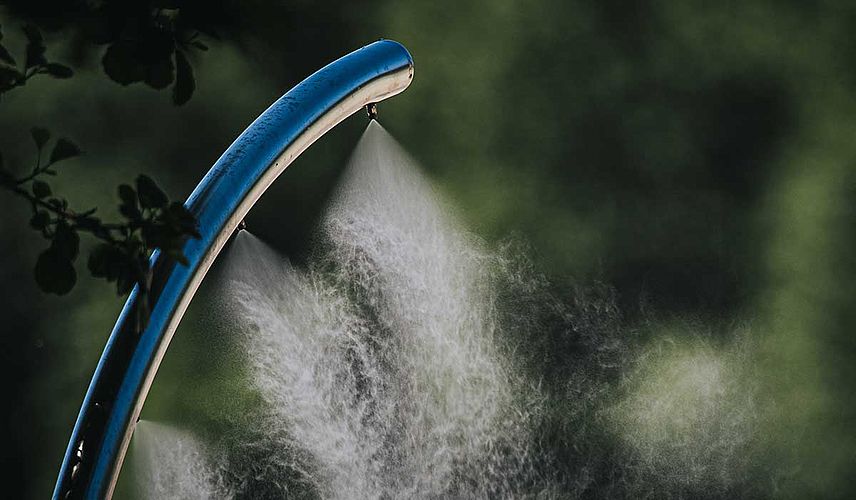
Aerosols, fine water droplets in the air, often carry invisible hazards. Learn how aerosols form at outlets of drinking water installations, what health risks they pose and how you effectively protect the users of your drinking water system.
What are aerosols and how do they form?
Aerosols are microscopically small droplets suspended in the air. In drinking water systems, these fine droplets form wherever water splashes, mists or exits under high pressure. As soon as you open a fitting, mechanical forces can atomise the escaping water into tiny particles, for example.
Typical locations in commercial properties, public buildings or hotels
- Showers and hand showers
- Washbasin fittings with aerators
- Humidifiers, cooling towers and dry coolers
- High-pressure cleaners
The smaller the droplets, the longer they remain suspended in the air and the deeper they penetrate into the human respiratory system when inhaled.
Why drinking water aerosols can pose a health risk
Drinking water aerosols carry a high risk of infection because people inhale the fine droplets deep into their lungs. Particles with a diameter of less than 5 micrometres easily overcome the natural protective mechanisms of the upper respiratory tract.
Water-bound bacteria and germs potentially present in the pipework can reach human airways directly via the misted water. Among the most dangerous pathogens, particularly for people with a weakened immune system, are:
- Legionella pneumophila: Inhaling aerosols containing legionella can trigger severe pneumonia, for example. Aerosols generated while showering are considered the main route of transmission.
- Pseudomonas aeruginosa: If aerosolised pseudomonads encounter mucous membranes or open wounds, they can cause dangerous infections.
How do you reduce infection risks from aerosols?
As an operator of a drinking water installation, you are strictly obligated to ensure water quality in accordance with the Water Supply (Water Quality) Regulations 2018. This obligation applies long before the water exits the fitting.
A seamless drinking water hygiene system throughout the entire drinking water installation is therefore an imperative requirement for preventing infections – not only from waterborne pathogens in aerosols!
Additionally, taps can be fitted with specialized aerators such as the NEOSTRAHL® Clinic or the NEOSTRAHL® Clinic Snap, which reduce aerosol formation.
It is also important to note that splashing water or insufficient hygiene during the cleaning of outlets can allow bacteria and germs to enter the tap outlet – a process known as retrograde contamination, which must be prevented.
Measures must also be taken to prevent waterborne pathogens from wastewater systems entering the washbasin area via backflowing aerosols from drains, for instance when washing hands or drawing water.
Water filters for taps & shower heads as an immediate measure
The use of water filters for taps and shower heads is a sensible immediate measure, not only in the event of contamination. Using these filters is also a recommended way to protect human health.
Secure your water hygiene with Aqua free
Effectively protect your drinking water installation against health hazards caused by misted water. Certified filter solutions and comprehensive service from Aqua free support you in this effort.
Get in touch with our experts now for individual advice!