Magazine
Stagnant water: one of healthcare’s most underestimated risks
In healthcare estates, risk does not always arrive with a siren. More often, it develops quietly, within systems that appear to be functioning normally while gradually drifting away from the conditions they were designed to maintain. Few issues illustrate this better than stagnation in potable water systems.
This article shows how water stagnation routinely undermines safety in complex healthcare estates, transforming engineered pipework into biological habitats. It delivers a comprehensive view of supply and drainage risks, offering a practical, layered strategy to move from mere compliance to operational resilience.
Flowing water as a prerequisite for safety
Water, in a healthcare setting, is almost instinctively associated with cleanliness and safety. It is the medium of hand hygiene, patient washing, clinical cleaning, food preparation, and countless routine activities that support care.
Yet that sense of safety is tied to a basic assumption: that water is moving, turning over, and remaining within the parameters intended by design and operation.
In reality, it often is not.
Stagnant water is a routine feature of complex buildings
Across modern healthcare estates, water regularly sits idle. Taps are used less often than expected. Clinical areas are refurbished, decanted, or repurposed. Rooms may stand empty for days, sometimes weeks. Some outlets are installed for flexibility, only to become rarely used in practice. In those moments, the system does not simply pause. It changes. And those changes are rarely benign.
Stagnation as feature of complex buildings
Stagnation is not an unusual event. It is a routine feature of complex buildings. That is precisely what makes it dangerous. It does not arise only from failure. It emerges from ordinary operational realities: changing occupancy, intermittent use, legacy infrastructure, over-capacity, and the unavoidable mismatch between how systems were planned and how buildings are actually used.
Despite this, stagnation is still too often treated as a secondary concern, something to be managed through occasional flushing, rather than recognised as something that can materially increase risk in healthcare water systems.
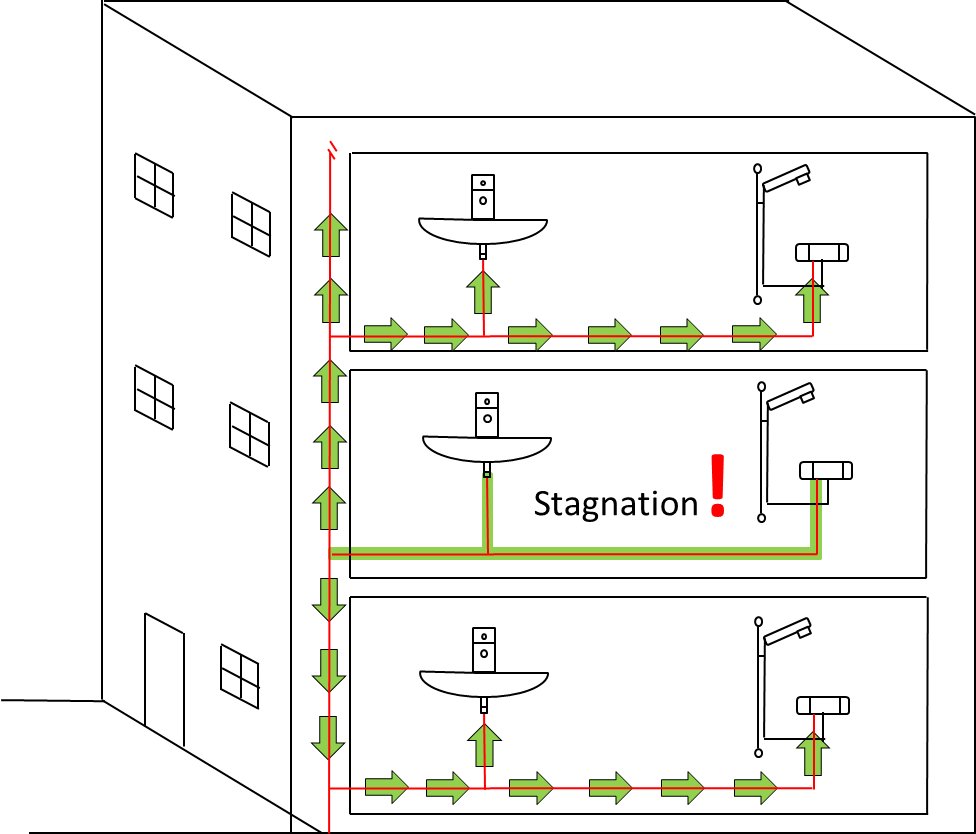
What happens when water stops moving
One reason stagnation remains underestimated is that it is often imagined as a problem of prolonged neglect. The phrase itself can suggest water left untouched for weeks. In practice, the process begins much earlier.
Once flow is reduced or absent, the conditions within the system begin to shift. Water age increases, temperatures begin to drift, and the hydraulic forces that normally act on internal surfaces are reduced.
Stagnant water influences the development and persistence of Biofilm
These changes do not initiate biofilm formation — biofilms are a natural and ubiquitous feature of water systems — but they significantly influence how they develop and persist.
In practical terms, this means that a water system affected by stagnation is no longer behaving only as engineered pipework. It has become, in part, a biological habitat.
That distinction matters in healthcare. Opportunistic pathogens such as Legionella pneumophila and Pseudomonas aeruginosa do not require dramatic system failures. They depend on favourable conditions: time, suitable temperatures, and the presence of stable microbial communities. Stagnation can help provide those conditions.
Just as important, biofilms do not remain static. They can intermittently release microorganisms back into the water, often unpredictably. This makes them difficult to detect and even harder to control. A sample taken at a single point in time may appear reassuring, while the underlying reservoir persists within the system.
In this sense, stagnation does not create biofilms — but it creates the conditions in which they become more established, more resilient, and more difficult to manage.
Why healthcare estates are particularly vulnerable
If stagnation were solely the result of poor design, the answer would be comparatively straightforward. Remove the dead legs, correct the oversizing, improve flow, and the problem would largely be solved. But stagnation in healthcare is not only a design issue. It is operational, organisational, and structural.
Hospitals are dynamic places. Wards open and close. Service lines shift. Departments expand, contract, merge, and move. A basin that is heavily used one year may be largely redundant the next. A room designed for one type of patient pathway may end up serving another. Even where the original design is sound, the actual use of the building changes over time, often significantly.
There are also practical realities that estates and infection prevention teams know all too well: temporary decants, delayed openings, phased refurbishments, seasonal pressure, and the need to preserve flexibility in the estate. Every one of these can leave parts of the water system under-used.
This is not a niche issue. It is normal healthcare operation.
Water age, design, and the reality of mismatch
The concept of water age is useful here. The longer water remains in a system, the greater the potential for changes in its characteristics – driven by temperature, materials, nutrient availability, and hydraulic behaviour. In complex buildings, water age can vary significantly between outlets.
This is where design and operation intersect. Systems may be sized for demand that never materialises, include capacity for future expansion, or be affected by changing clinical use. Components such as expansion vessels or dead ends can create areas of poor turnover, even where the wider system appears to function adequately.
Looking beyond the tap
For many years, the dominant conversation around water hygiene centred on the supply side: incoming water, stored water, calorifiers, distribution temperatures, little-used outlets, showerheads, and terminal fittings. All of that remains important. But it is no longer enough.
Increasingly, attention is also being directed to the drainage side of the system, and with good reason.
Sink drains, traps and siphons have direct relevance to clinical risk
Sink drains, traps, and siphons are microbiologically active environments. They contain moisture, nutrients, and surfaces well suited to biofilm formation. In hospitals, they can become persistent reservoirs for water-associated pathogens. This is not just a laboratory curiosity. It has direct relevance to clinical risk, especially where sinks are close to patient activity and hand hygiene.
The key point is that the drain is not separate from the care environment simply because it sits below the basin. Under the right conditions, what grows there does not necessarily stay there.
That matters because healthcare has historically been more comfortable discussing supply-water hygiene than wastewater-associated risk. Yet the patient does not experience those systems as separate worlds. They meet at the washbasin, the shower, the sink, and the surrounding care environment. From the patient’s perspective, the distinction between “fresh water side” and “drain side” is irrelevant. What matters is whether microorganisms can move from either side into the space around them.
Joining up the risk picture
Once supply-side stagnation and drainage-side aerosolisation are viewed together, a more complete picture emerges.
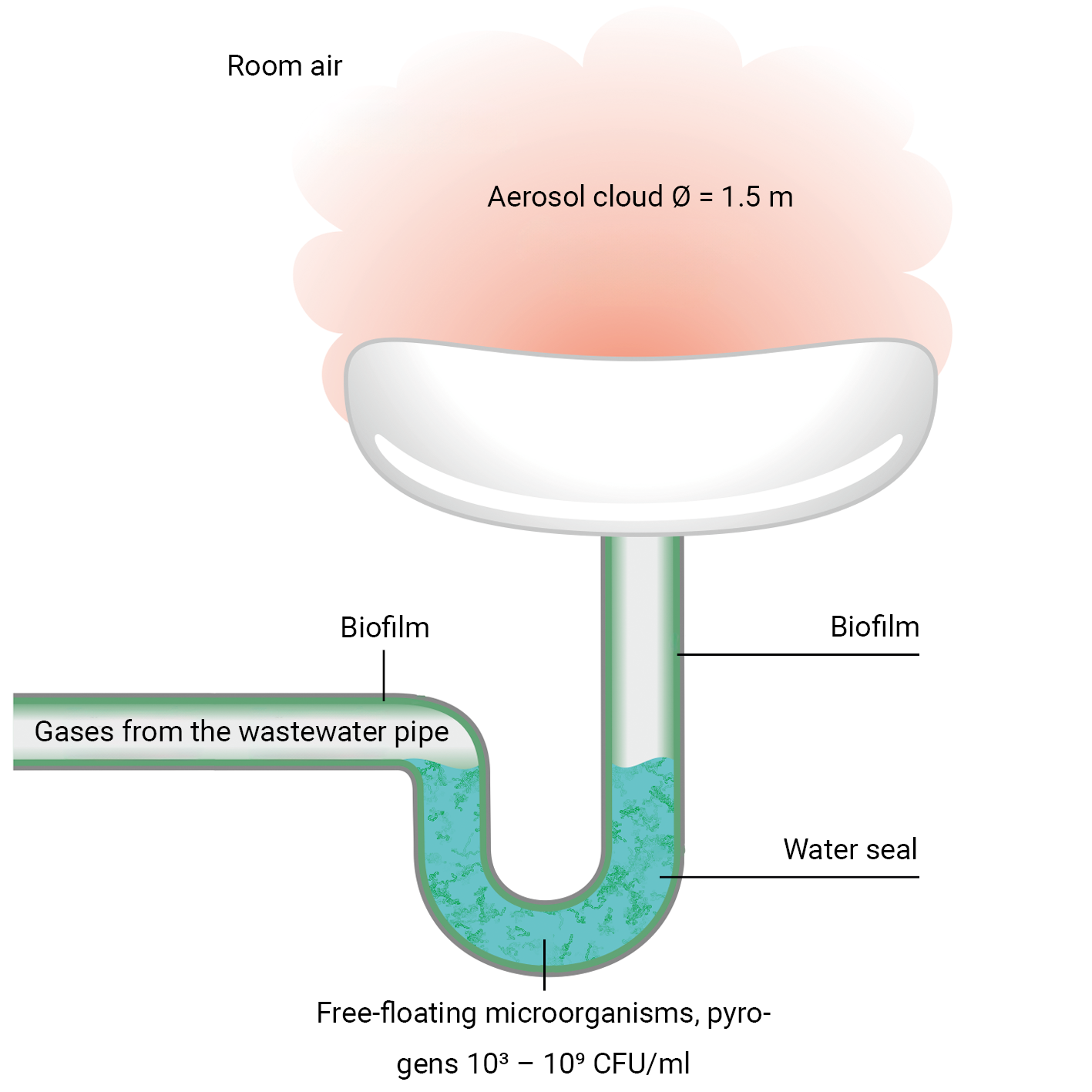
Stagnation in pipework promotes biofilm formation and microbial persistence upstream, while low-use outlets increase water age and create favourable conditions for opportunistic pathogens. At the same time, drainage systems can act as downstream reservoirs, with splashback or aerosols redistributing microorganisms into the surrounding environment.
These are not separate issues but connected parts of the same water system.
In high-risk clinical settings, this matters. Patients are more vulnerable, and “close enough” is not sufficient. It also challenges the traditional divide between engineering and infection prevention – stagnation sits at the intersection of both, with consequences that directly affect patient safety.
From single measures to layered protection
An effective response to stagnation cannot rely on a single intervention. It requires a layered approach.
Holger Eggert, Head of Product Management and Business Development at Aqua free
At system level, good design remains essential—avoiding oversizing and dead legs, ensuring proper circulation, and minimising splash. Operationally, maintaining regular water turnover through structured flushing remains a core control measure, supported where necessary by monitoring or automation.
At the point of use, additional barriers may be required. NETB No.2024/3 highlights that high-risk patients should receive sterile water or water via 0.2 µm point-of-use filtration. More broadly, end-of-line water filters provide protection where immediate microbiological assurance is needed.
The drainage side must also be considered. Where splash or aerosolisation from contaminated drains is a credible risk, hygienic siphon design can help reduce aerosol generation and limit contamination of the surrounding area.
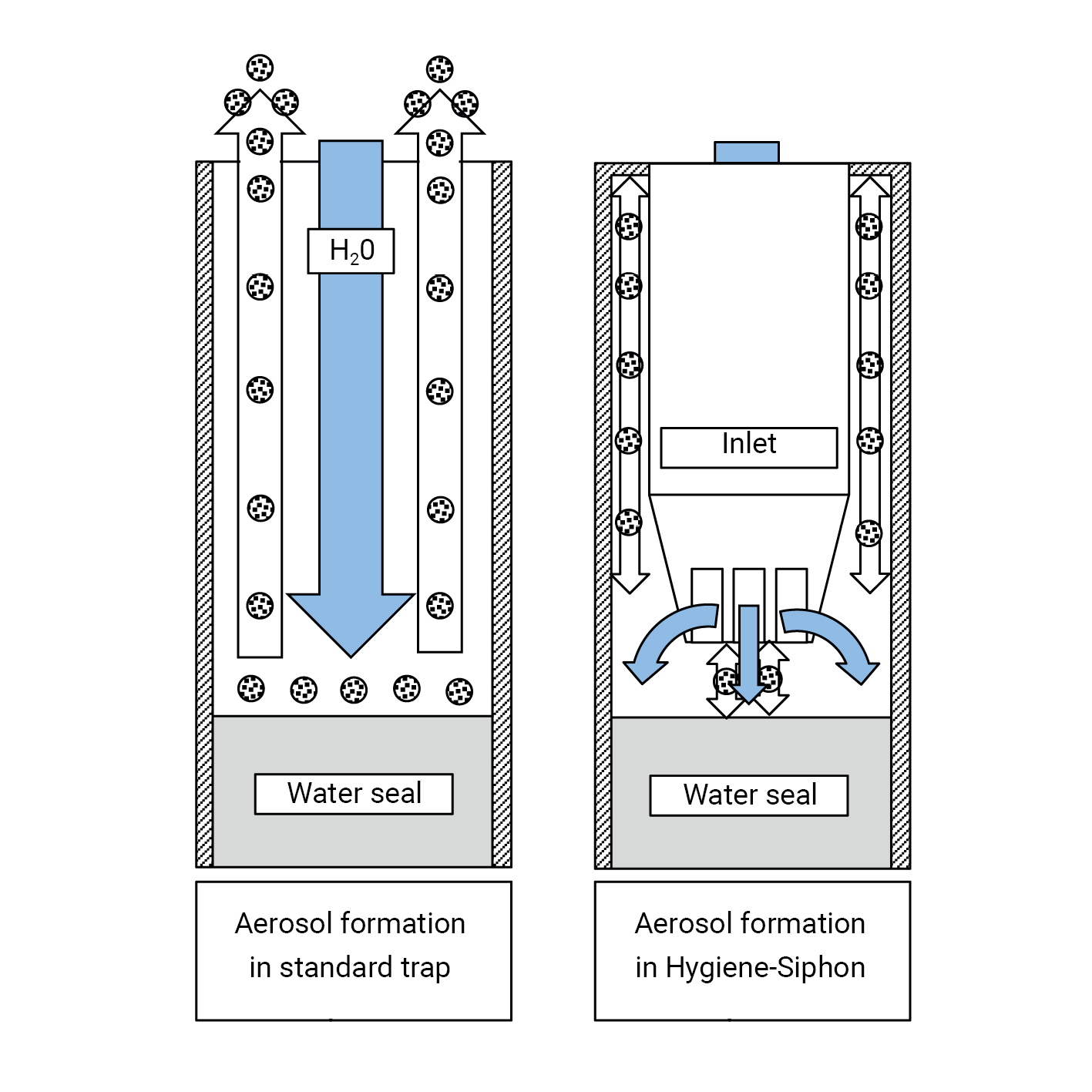
Together, flushing, filtration, and hygienic drainage form a complementary, layered strategy – often the most practical way to manage risk in complex healthcare environments.
The human factor in water safety
Technical documents and engineering measures are essential, but they do not by themselves keep water safe. People do.
This is sometimes forgotten in conversations that become dominated by temperatures, flow rates, and sampling plans. In practice, water safety depends on how well estates, engineering, infection prevention, clinical teams, and contractors understand one another’s concerns and translate guidance into routine action.
A little-used outlet is not just an engineering observation. It may be the result of a changed clinical workflow. A sink that is difficult to use without splash may be telling a design story. A repeated need for manual flushing may indicate a deeper mismatch between system layout and actual service delivery.
Water safety as a live operational issue
The organisations that manage stagnation well are often those that treat water safety as a live operational issue rather than a paper exercise. They ask not only whether there is a policy, but whether the policy fits the building as it is really being used. They look for recurring weak points. They review how spaces are changing. They recognise that water risk is not static simply because the pipework is hidden.
This is particularly relevant when handovers occur between project teams and operational teams. A system that looks compliant at commissioning may behave very differently six months later once the space is occupied in a less predictable way than originally planned. Likewise, a ward redesign may solve one clinical problem while unintentionally creating another through awkward outlet positioning, changed use patterns, or poor sink-drain geometry. Without that feedback loop between design, operation, and infection prevention, stagnation remains something people react to rather than something they anticipate.
The bottom line: from compliance to resilience
For years, much of the sector’s effort was understandably framed around compliance: risk assessments completed, records maintained, temperatures checked, sampling reviewed, actions closed. None of that is unimportant. But compliance alone is a limited ambition.
Resilience is a better one.
A resilient water system is not one that merely passes its next inspection. It is one that can continue to maintain safe conditions despite evolving building use, staffing pressures, refurbishments, heat stress, delayed occupancy, and the inevitable surprises of healthcare operation. It is a system that is designed with realistic use in mind, supported by workable controls, and reviewed when assumptions change.
Subscribe to our newsletter
In our newsletter, we share interesting insights, tips, and news regarding water hygiene. Four times a year, Aqua free provides you with information on specialist and legal topics.